The Gold One And The Quiet One
A mountain temple that grants wishes and gets twenty-three thousand reviews, and a wooden pavilion nearby that most people have never heard of.
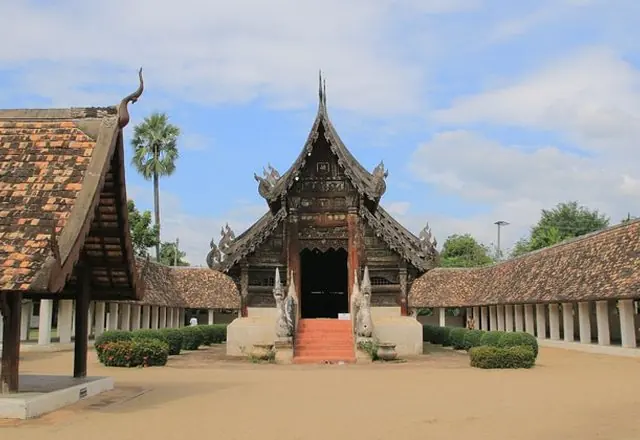
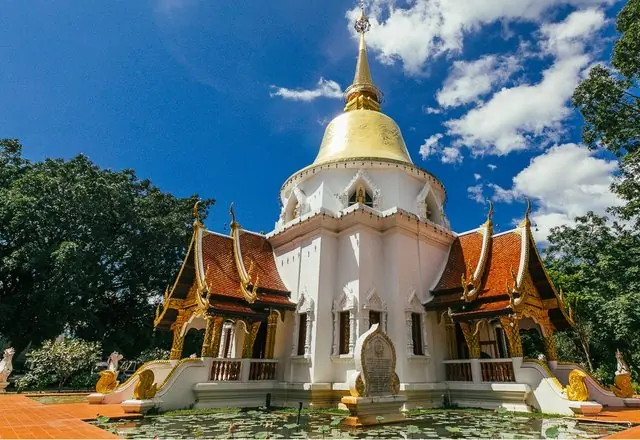
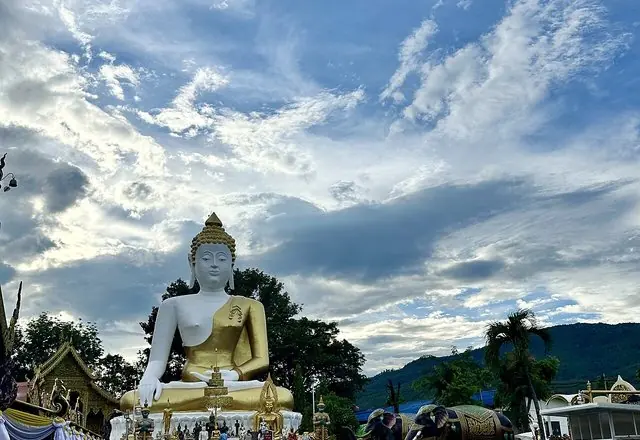
These two temples are ten minutes apart and could not be less alike. Doi Kham sits on a hill above the Royal Flora gardens with a seventeen-metre Buddha visible from the ring road, thousands of jasmine garlands left by people whose wishes came true, and a view over the whole southern plain. Wat Ton Kwen, down on the flat, is a single small wooden pavilion from 1856 that almost nobody visits.
Ton Kwen is the reason to make the trip. It is a sala built to receive relics on their way to Wat Phra That Si Chom Thong, cruciform, dark teak, with no walls — and it is the most complete piece of pure Lanna architecture left in the province.
The route
Stop by stop, with the drive between each.
- 1
Wat Phra That Doi Kham
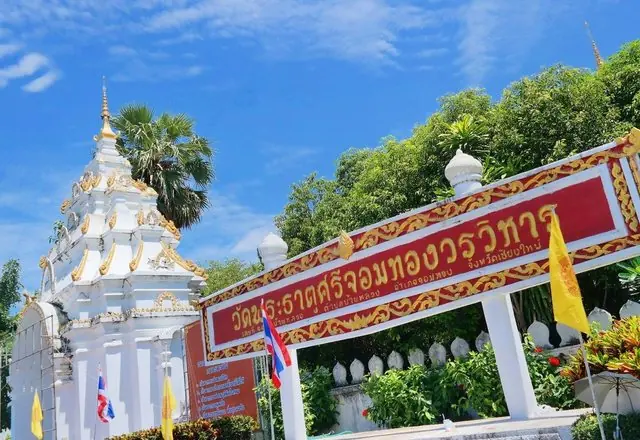
Thirteen hundred years old, and now the busiest wish-granting temple in Chiang Mai. Come for the jasmine, the giant seated Buddha and the view; come early, because the road up is single-lane in places and the car park fills. Open 6am to 6pm.
The temple on the golden hill south of the city, with a seventeen-metre seated Buddha visible from the airport road and a chedi said to be older than Chiang Mai itself. Local people come to ask for luck and return with jasmine garlands when it works, which is why the stalls sell so many.
 Wikipedia →
ManoiCMU · CC BY 4.0 32 min · 16 km - 2
Wat Ton Kwen (Wat Intharawat)
A registered national monument and the antidote to the last stop: an open wooden pavilion under old trees, dark inside, with carved gables and almost no one there. Open 6am to 5pm.
Also called Wat Inthrawat, at Hang Dong. Its cruciform Sala Chaturamuk is the only one of its kind in the north and has never been rebuilt, which makes it the clearest surviving example of the form.
Tourism Directory →Ministry of Tourism & Sports · Ministry of Tourism & Sports, Thailand 15 min · 7 km
Best time to go
Year-round. November to February is coolest. Doi Kham is at its most extraordinary during Songkran and on Buddhist holy days, when the garland offerings pile up — and at its most crowded, which is the trade. Ton Kwen is quiet always, except during the Inthakhin festival in May.
Before you set off
The road up Doi Kham is narrow with blind bends and pedestrians walking up it; take it slowly and use engine braking coming down. Dress modestly at both. Ton Kwen is a working monument, not an attraction — there is no ticket desk, and it is closed to visitors during ceremonies. Combine this with the Hang Dong handicraft road at Ban Tawai if you want a full day.
Places on this route were suggested by Wongnai — temples to visit in Chiang Mai. Distances and drive times are our own, measured stop by stop.