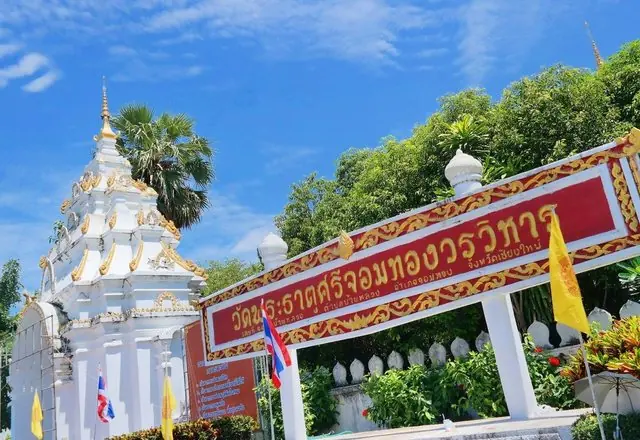
A Princess's Temple And A Thousand Naga
North through Mae Rim to a royal temple, a hill-tribe farming village and a waterfall, then on to the most extravagant temple complex in the north.
Most people who drive north out of Chiang Mai are going to Pai or the Samoeng loop and never turn off. This day is what is on either side of those roads: a temple built for a Lanna princess, a village where seven hill communities farm and weave in the open, a waterfall almost nobody stops at, and finally Wat Ban Den, which is either the most beautiful temple in the north or the most excessive, depending on who you ask.
Do it in this order and the driving gets longer as the day goes on, which is the right way round — the last hour back down the 107 is fast and straight.
The route
Stop by stop, with the drive between each.
- 1
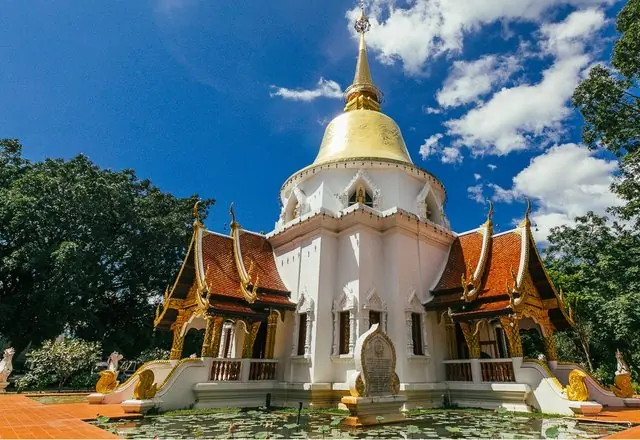
Wat Pa Dara Phirom
A century-old royal temple named for Princess Dara Rasmi, the Chiang Mai princess who became a consort at the Bangkok court. Stone lions on the stairs, a gilded chedi, and vine motifs and three-star symbols through the ubosot that are all references to her. Open 6am to 6pm.
A royal temple of about a century old in Mae Rim, with stone lions at the steps and a gilded chedi behind.
Tourism Directory →Ministry of Tourism & Sports · Ministry of Tourism & Sports, Thailand 29 min · 16 km - 2
Ban Tong Luang
A working agricultural settlement where families from seven hill communities — Karen, Hmong, Palaung, Lahu and others — farm, weave and sell what they make, laid out along a stream with rice paddies and buffalo. It divides opinion, and it is worth knowing why before you go: it was created as a place visitors could come, and the families live and work here rather than being visited in their own villages. Buy from the loom rather than the display case.
A managed village near Mae Rim where families from several hill groups live and sell weaving and silverwork to visitors. It is set up for tourism and charges an entry fee; go knowing that, and buy from the makers directly.
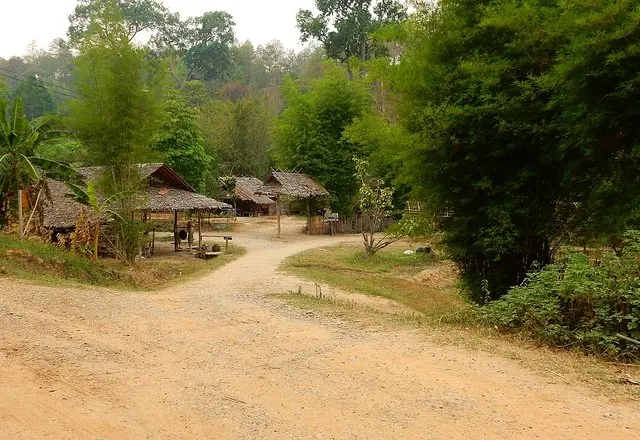 Wikimedia Commons →
Roma Neus · CC BY 3.0 15 min · 10 km - 3
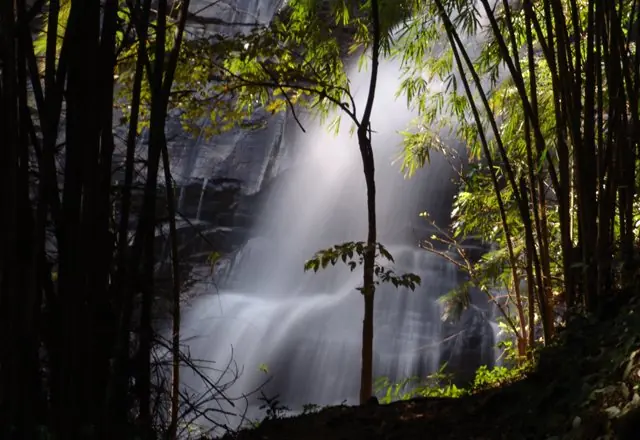
Tad Mok Waterfall
Twenty-six metres into a pool inside Doi Suthep–Pui national park, ringed by hundred-year-old trees. A short walk from the car park and quiet almost always. Open 8am to 4.30pm.
A forest waterfall reached by a short walk from the road, with a pool at its foot deep enough to swim in for most of the year. Quiet even at weekends; there is little at the trailhead, so bring water.
 Wikimedia Commons →
Benny · CC BY-SA 3.0 20 min · 15 km - 4
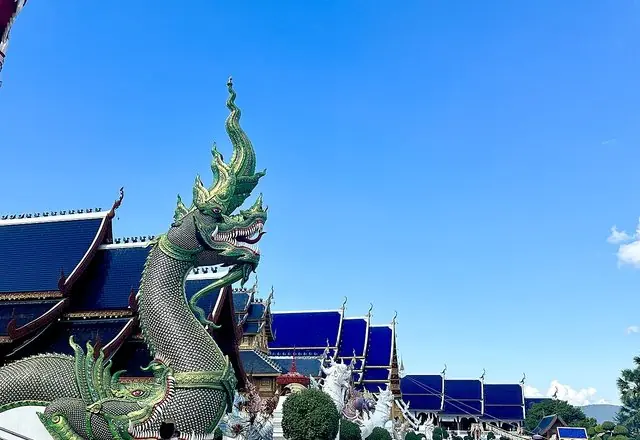
Wat Ban Den (Wat Den Salee Sri Muang Gaen)
Not one temple but a hillside covered in them: gilded viharns, a zodiac pavilion for all twelve birth years, and naga staircases in every direction, all built over the last thirty years by one abbot with a great deal of ambition. Nothing here is ancient and everyone knows it. Open 7am to 6pm.
A hilltop temple in Mae Taeng rebuilt on a grand scale since the 1990s by its abbot, with a row of chedis in the twelve animal-year styles, a long ordination hall and grounds that go on and on. New, bright, enormous and entirely sincere; go in the morning before the buses.
 Wikipedia →
ManoiCMU · CC BY-SA 4.0 53 min · 42 km
.jpg)

Best time to go
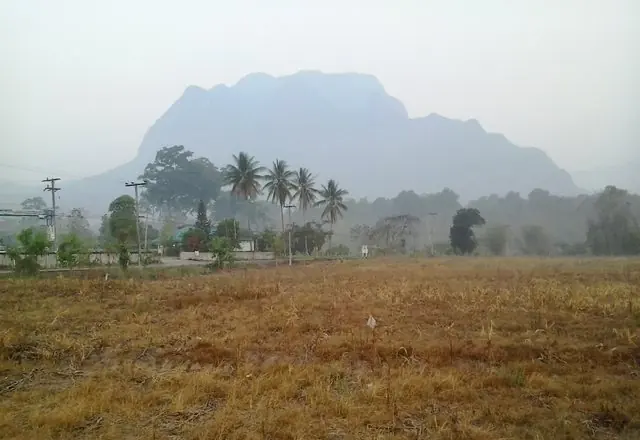
November to February for the clearest air and the coolest walking. The green season is beautiful along the 1096 and Tad Mok is at its strongest, but the last track in gets slippery. February to April the valley haze takes most of the views.
Before you set off
Wat Ban Den closes its inner buildings around 5pm even though the grounds stay open; leave by four if you want to see inside. Tad Mok charges the national park foreigner rate — bring cash. Fill up in Mae Rim; the 1096 and the road to Ban Den have few stations. Dress modestly at both temples.
Places on this route were suggested by Wongnai — temples to visit in Chiang Mai · TrueID Travel — waterfalls of Chiang Mai · Kapook Travel — villages worth slowing down for. Distances and drive times are our own, measured stop by stop.