The Province That Kept Its Old Buildings
The finest surviving wooden Lanna temple in the north, a hilltop of white chedis, and a town that still runs horse carriages.
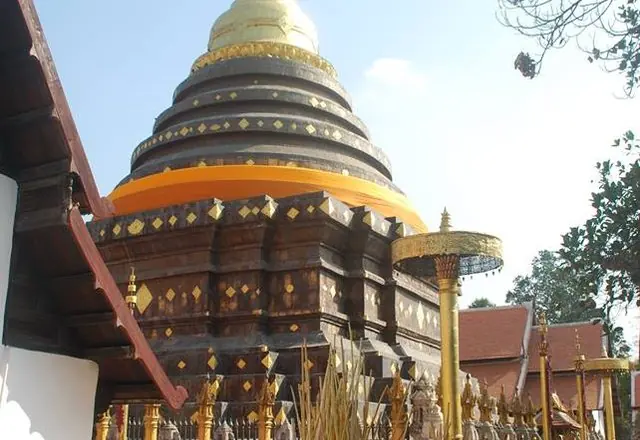
Chiang Mai rebuilt most of its old temples. Lampang, an hour and a half southeast, largely did not — which is why Wat Phra That Lampang Luang is the building northern Thai architects send students to see. It is a walled complex of teak and brick from the fifteenth century, and the main viharn is open-sided, dim, and almost entirely original.
This is the most temple-heavy route in the collection and the least strenuous. It is also the best wet-season option: everything of interest is a short walk from a car park.
The route
Stop by stop, with the drive between each.
- 1
Wat Phra That Lampang Luang
Walled, moated and raised above the fields. The open viharn, the brick gateway and the small chamber where a pinhole in the wall projects an inverted image of the chedi onto a cloth — a camera obscura, five centuries early.
A 15th-century Lanna temple at Ko Kha, inside a low wall on a mound. Its open wihan is one of the oldest wooden buildings in the country. In 1732 Thipchang drove the Burmese garrison out of these grounds, and a bullet hole from that fight is still shown in the fence.
Tourism Directory →Ministry of Tourism & Sports · Ministry of Tourism & Sports, Thailand 1h 42m · 96 km - 2
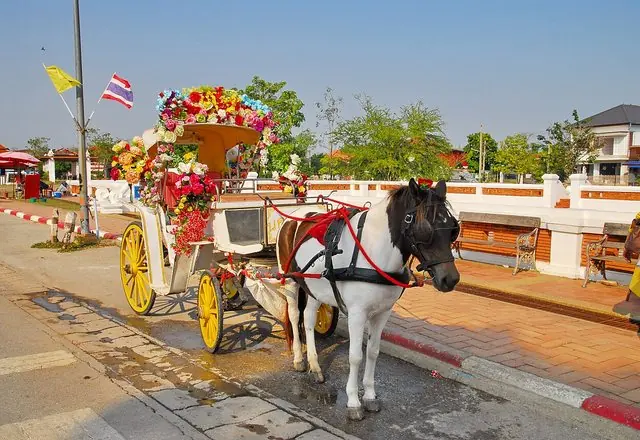
Lampang old town & the horse carriages
Teak shophouses along the Wang river, a night market on the weekend, and the only horse carriages still working as transport in Thailand.
Lampang is the one Thai town that kept its horse-drawn carriages, and a ride through the old quarter along the Wang river is the way to see it: teak mansions from the timber years, Burmese-style temples built by the timber merchants, and Kad Kong Ta, the old trading street that becomes a walking market at weekends.
 Wikimedia Commons →
Thanate Tan from Bangkok, Thailand · CC BY 2.0 26 min · 16 km - 3
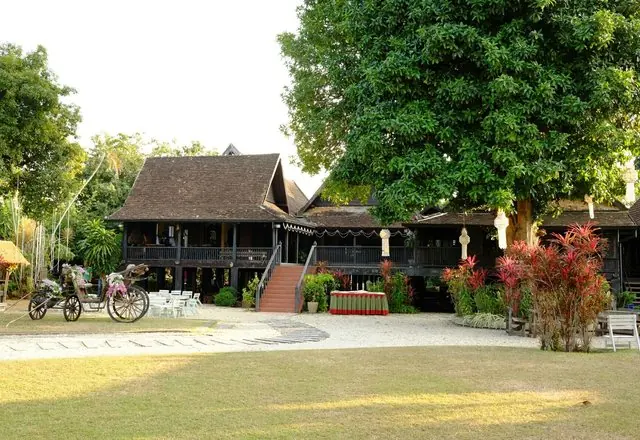
Baan Sao Nak
A large teak house on more than a hundred posts, furnished as it was lived in.
A teak house of 1895 standing on 116 pillars — *nak* means "many" in northern Thai, and that is all the name says. The verandas follow Burmese practice and the roof and frame are Lanna; it was built as a house for receiving guests, and the family's furniture is still in it.
 Tourism Directory →
Ministry of Tourism & Sports · Ministry of Tourism & Sports, Thailand 6 min · 2 km - 4
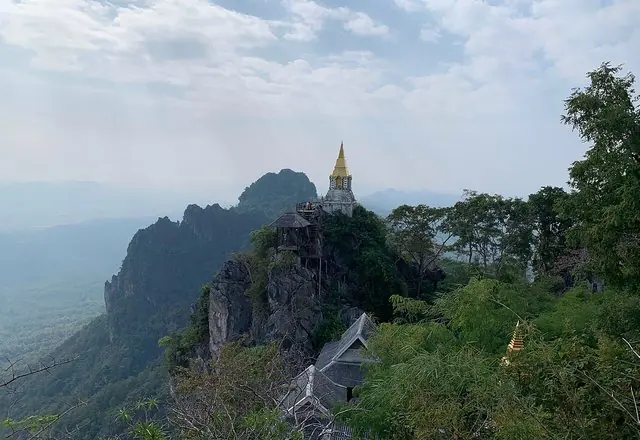
Wat Chalermphrakiat Phrachomklao
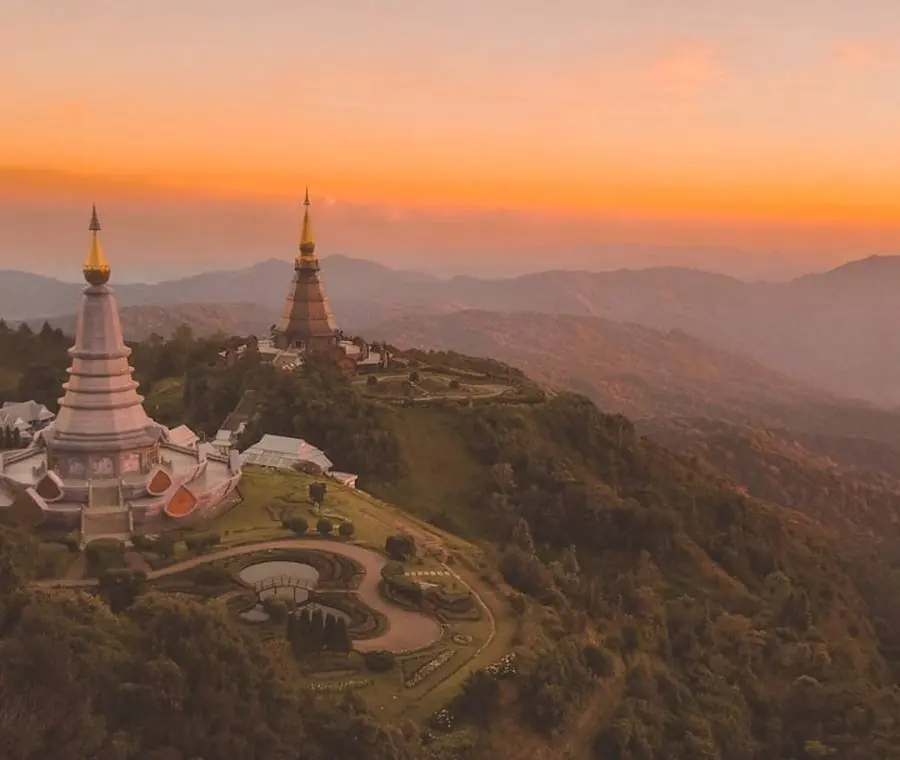
White chedis scattered along a limestone ridge, reached by shuttle truck and then a steep, exposed stair with chains for handholds. Not for anyone uneasy with heights, and extraordinary if you are not.
White chedis set on the tops of limestone pinnacles high above the Lampang valley, built to mark two hundred years since the birth of King Rama IV. Reached by shuttle truck and then a steep climb; the view from the platforms is the reason to make it.
 Wikimedia Commons →
Chainwit · CC BY-SA 4.0 1h 14m · 60 km
.jpg)

Best time to go
Year-round, and the strongest choice in the green season because so little of it is exposed. November to February is most comfortable. Lampang gets hot — hotter than Chiang Mai — from March to May.
Before you set off
Wat Chalermphrakiat's final ascent is genuinely steep and can close in high wind or heavy rain. Shoulders and knees covered at all the temples. Route 11 is fast; watch for trucks descending the Doi Khun Tan pass. The Thai Elephant Conservation Centre is nearby and is a government facility rather than a commercial camp — if elephants are on your list, research the specific operator carefully, and treat riding as a reason to walk away.