Three Temples That Look Like Nothing Else
A white temple, a blue temple and a black house — three artists' visions within twenty kilometres of each other.
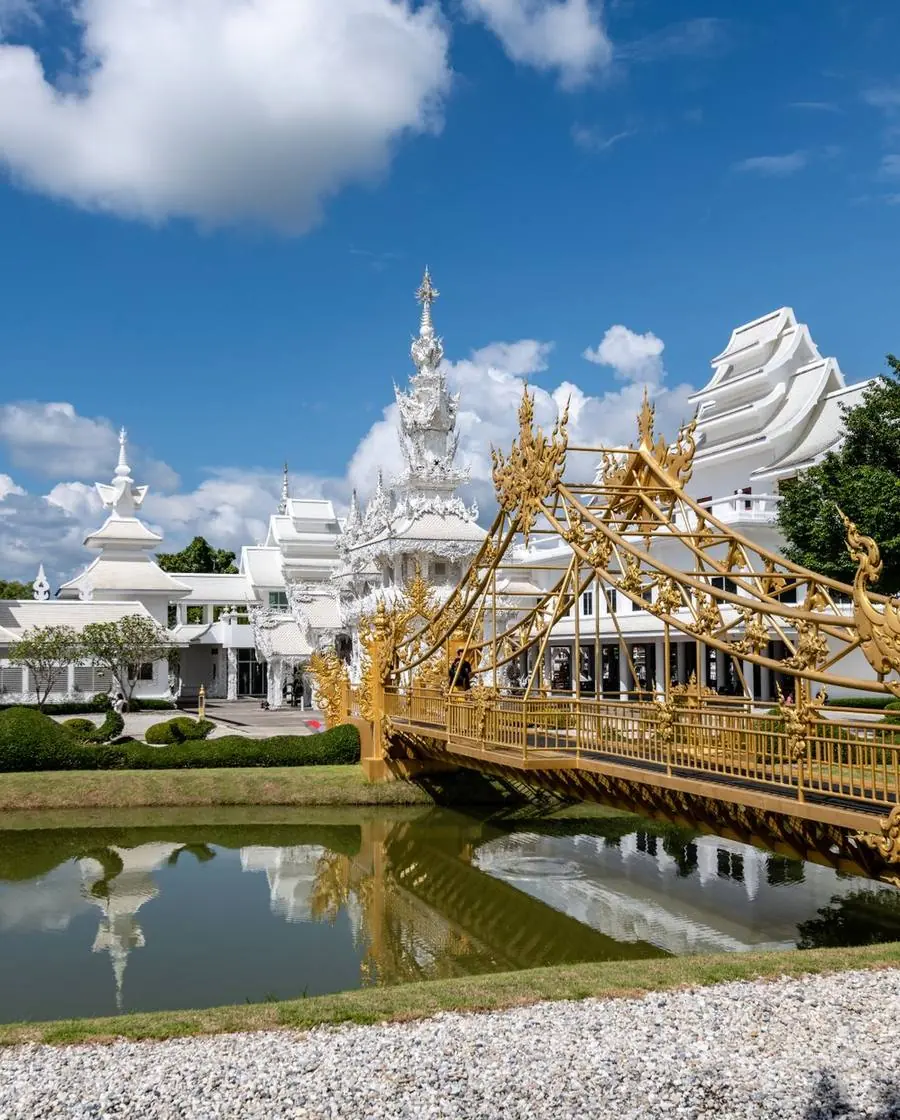
Chiang Rai's three famous sites are not ancient. They are the work of three modern Thai artists, built within living memory, and they are stranger and more personal than anything the old kingdoms left behind. Wat Rong Khun is a white temple encrusted in mirror glass, approached across a bridge over reaching hands. Wat Rong Suea Ten is its opposite in cobalt and gold. Baan Dam is a compound of black wooden halls filled with bones, hides and horn — less a temple than an argument.
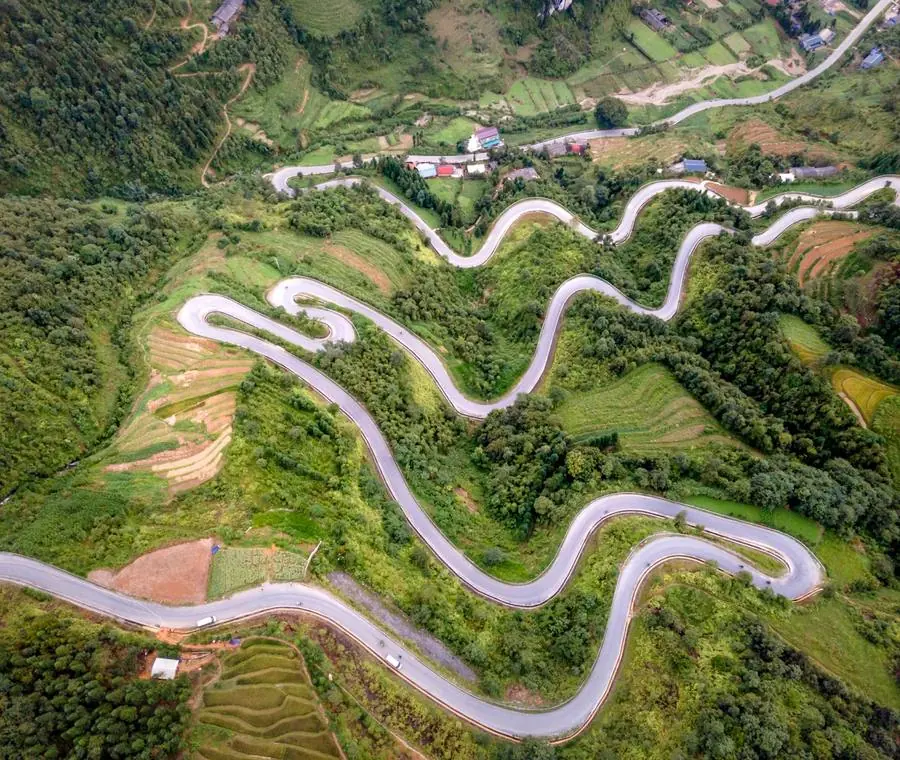
Route 118 climbs and descends through forest for three hours. It is a good road and a genuinely enjoyable drive.
The route
Stop by stop, with the drive between each.
- 1
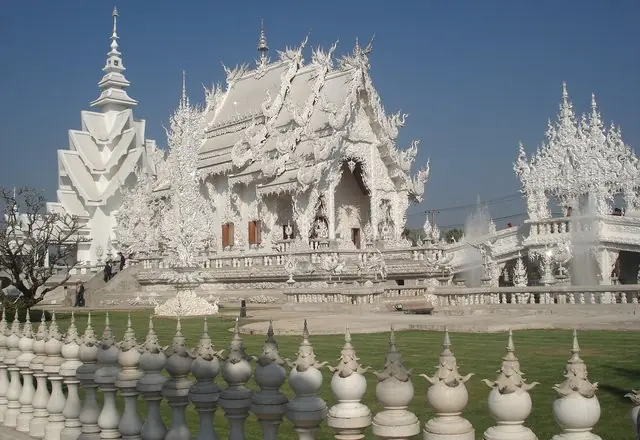
Wat Rong Khun (White Temple)
Go at opening. By ten it is very busy and the white glare is punishing at midday.
Chalermchai Kositpipat's white temple, begun in 1997 and still unfinished: white plaster set with mirror glass so the whole building glitters, reached over a bridge crossing a field of reaching hands.
 Tourism Directory →
Ministry of Tourism & Sports · Ministry of Tourism & Sports, Thailand 2h 51m · 172 km - 2
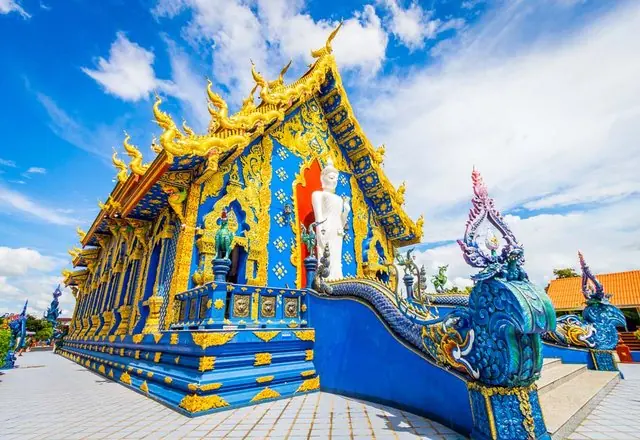
Wat Rong Suea Ten (Blue Temple)
Cobalt and gold, with a large white Buddha. Smaller than the White Temple and rewards a slower look.
Sapphire blue from floor to ceiling, built by a local artist who had worked under Chalermchai Kositpipat. Newer and smaller than the White Temple, and the interior is the part to see.
 Tourism Directory →
Ministry of Tourism & Sports · Ministry of Tourism & Sports, Thailand 22 min · 16 km - 3
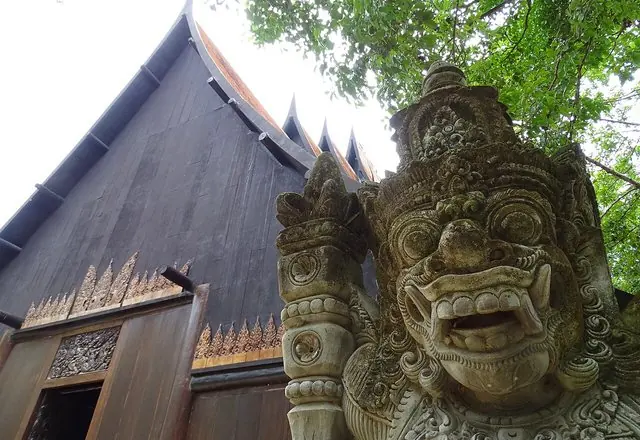
Baan Dam Museum (Black House)
Forty-odd black structures across a garden, filled with the artist's collection of skins, skulls and carved horn. Unsettling by design.
Thawan Duchanee's compound outside Chiang Rai: some forty dark teak buildings holding the national artist's collection of horns, skins, bones and carved furniture, built up over decades as a meditation on death. It borrows temple forms but is not a temple, and it is the counterpart to the White Temple across town.
 Wikipedia →
Adam Jones from Kelowna, BC, Canada · CC BY-SA 2.0 15 min · 9 km - 4
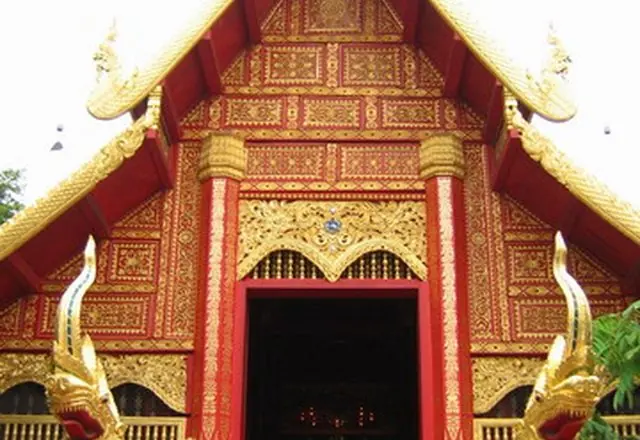
Wat Phra Kaew, Chiang Rai
Where the Emerald Buddha now in Bangkok was found, after lightning split the chedi that hid it.
Where the Emerald Buddha was found, after lightning broke open the chedi it had been sealed inside. It stayed here 45 years before it went to Chiang Mai; the temple was called Wat Pa Yia before that.
 Tourism Directory →
Ministry of Tourism & Sports · Ministry of Tourism & Sports, Thailand 23 min · 14 km - 5
Singha Park
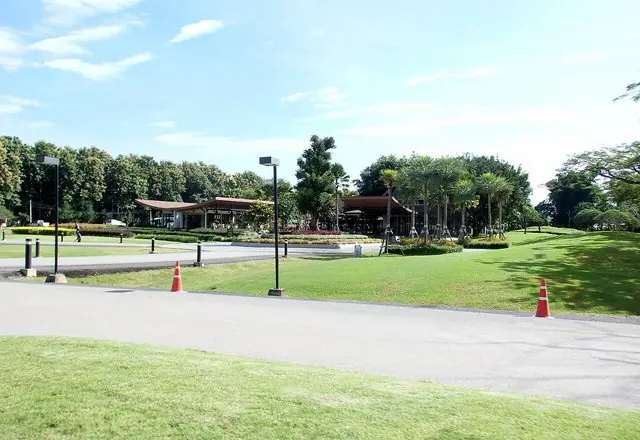
Tea terraces, cycling paths and a long zip line, on a working estate.
A working farm outside Chiang Rai owned by the brewery, laid out with tea plantations, orchards, a lake and cycling paths. Trams tour the grounds and a restaurant looks out over the tea; in the cold season it hosts a hot-air balloon festival.
 Wikimedia Commons →
mohigan · CC BY-SA 3.0 18 min · 13 km - 6
Choui Fong tea plantation
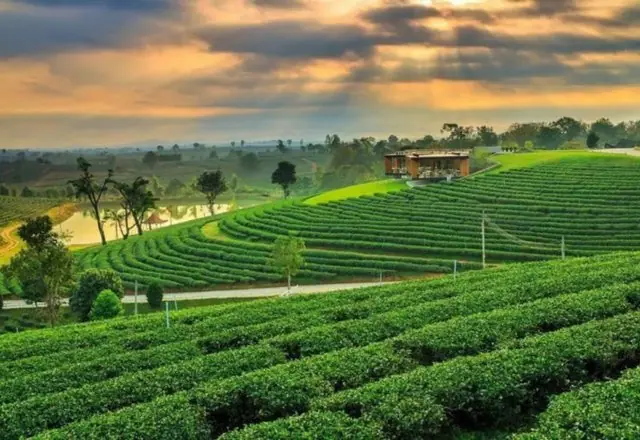
Rolling planted hills with a good café looking over them. The best photograph in the province.
Tea planted in contour rows over a set of low ridges in Mae Chan, with a café built out on a terrace above them. The rows are the view.
 Tourism Directory →
Ministry of Tourism & Sports · Ministry of Tourism & Sports, Thailand 1h 06m · 54 km
.jpg)
Best time to go
November to February is clear and comfortable. The green season makes the tea plantations spectacular and Route 118 slippery in the afternoon. Burning season affects Chiang Rai as badly as Chiang Mai, sometimes worse.
Before you set off
Three hours each way is too much for a day trip; stay overnight in Chiang Rai town. The White Temple has a dress code and a strict no-re-entry rule. Baan Dam is not a temple and its contents disturb some visitors — worth knowing before you bring children. Fuel is easy on 118. Watch for slow trucks on the climbs.