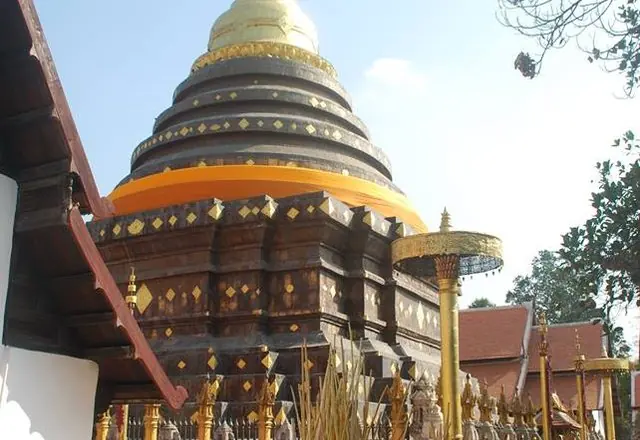
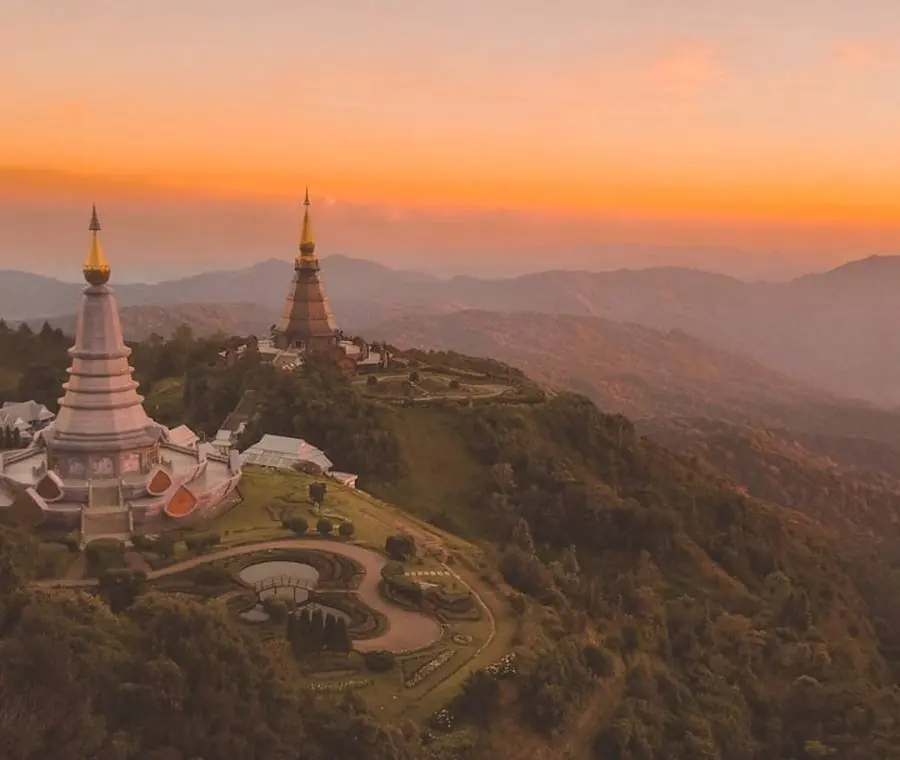
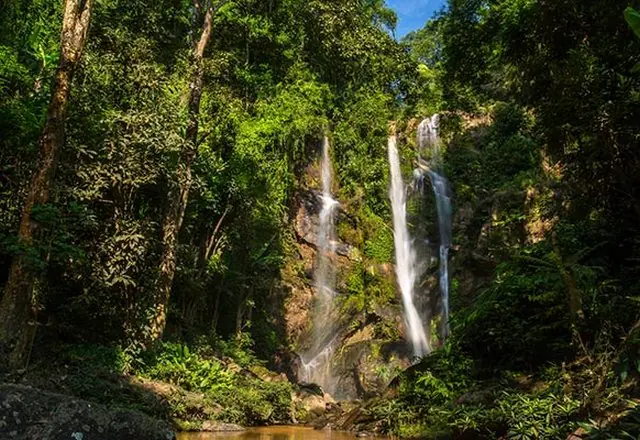
Under The Limestone Wall
A cave system running deep into Thailand's third-highest peak, a forest temple on the hillside above, and a market town that has not tried to become anything else.
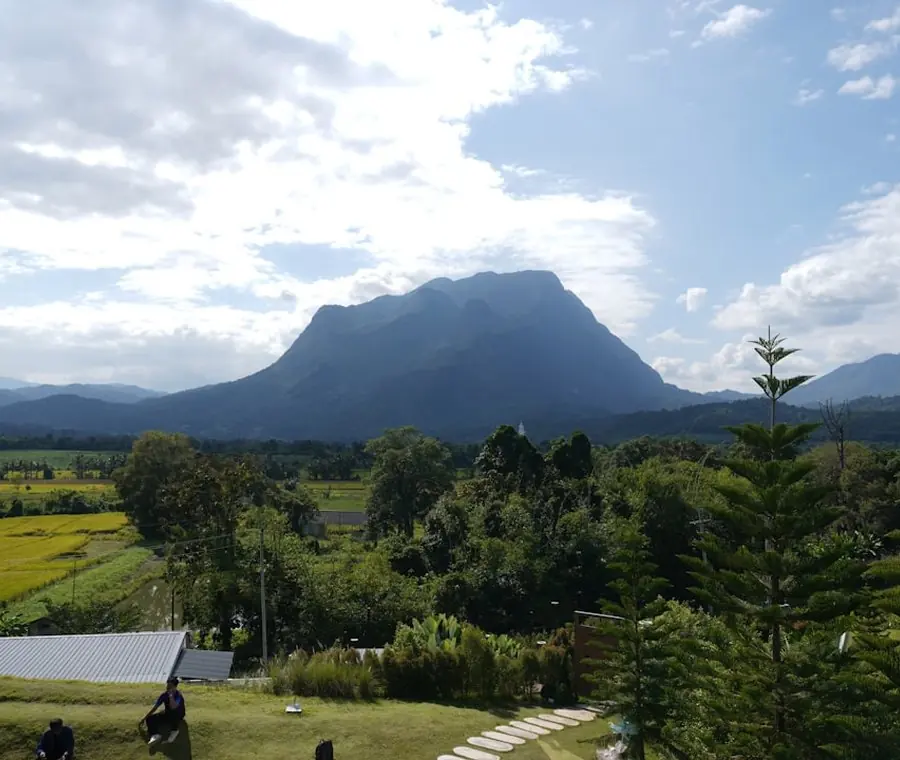
Doi Luang Chiang Dao rises straight out of the plain to well over two thousand metres, a limestone massif that looks like it was dropped there. You cannot climb it without a permit and a guide, and for much of the year not at all — but the cave beneath it is open to anyone, and the town at its foot is one of the few places within easy reach of Chiang Mai that has stayed genuinely quiet.
The route
Stop by stop, with the drive between each.
- 1
Chiang Dao morning market
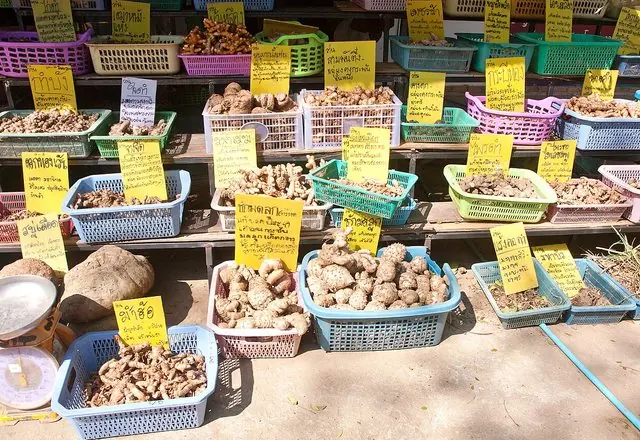
Best before nine. Northern breakfast food, produce from the hill villages, and no souvenir stalls.
The district town's fresh market, busiest from first light, with produce from the valley and the highland farms: greens, mushrooms, chillies, and northern sausage and chilli dips for breakfast. It is done by mid-morning.
 Wikipedia →
Stand-in photo: a produce stall in Chiang Dao · Andrea Schaffer from Sydney, Austral… · CC BY 2.0 1h 25m · 71 km - 2
Tham Chiang Dao
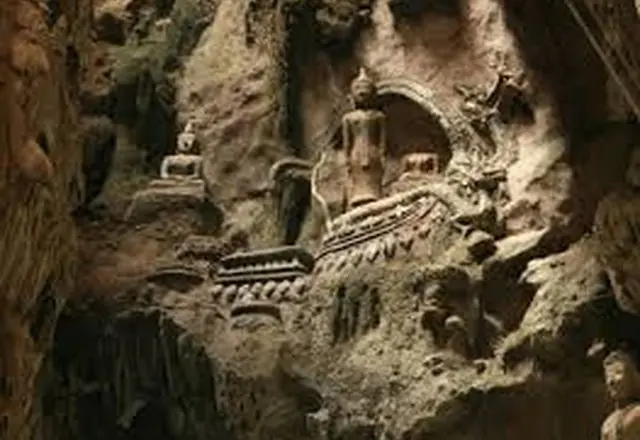
The first chambers are lit and easily walked. Beyond them the cave runs for kilometres in darkness, and you go with a local guide carrying a pressure lantern. Take the guide. The lit section is a tourist stop; the dark section is the reason to come.
A cave temple at the foot of Doi Luang Chiang Dao, begun in 1767. The stairway up to the cave mouth was added in 1887, a hermit named Kantha put a Buddha image inside in 1913, and Khruba Sri Wichai rebuilt much of it in 1934. Lit passages run several hundred metres in.
 Tourism Directory →
Ministry of Tourism & Sports · Ministry of Tourism & Sports, Thailand 10 min · 6 km - 3
Wat Tham Pha Plong
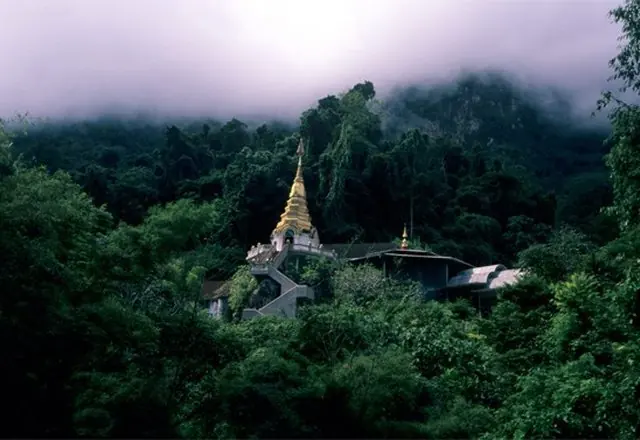
Five hundred-odd steps up through forest to a meditation temple built against the cliff, with Buddhist teachings posted along the climb. Quiet enough that the loudest thing is the cicadas.
Up a long stair in a cleft of limestone above Chiang Dao. At the top is the Grateful Chedi, built by the disciples of Luang Pu Sim Phuttajaro to hold his relics, and a small museum of his belongings.
 Tourism Directory →
Ministry of Tourism & Sports · Ministry of Tourism & Sports, Thailand 3 min · 2 km - 4
Sri Sangwan Waterfall
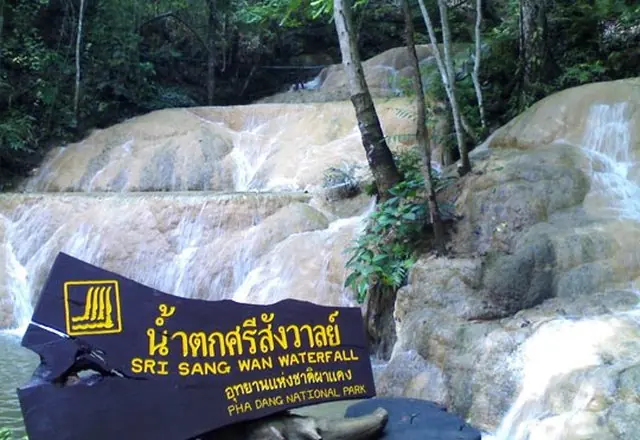
A wide, shallow fall with pools, usually near-empty on weekdays.
Four limestone tiers, each with a name of its own — Kanuengha, Chong Thara, Ngam Nathee, and Si Sangwan at the top. Limestone carries no moss, so all four can be walked without slipping.
 Tourism Directory →
Ministry of Tourism & Sports · Ministry of Tourism & Sports, Thailand 42 min · 36 km - 5
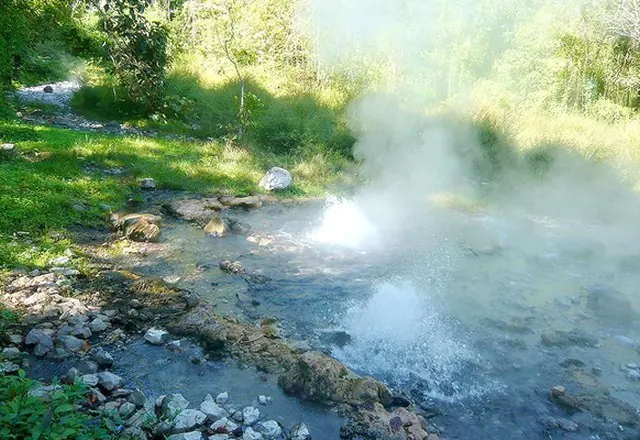
Chiang Dao hot springs
Simple, undeveloped pools. A good last stop before the run south.
Hot mineral water that surfaces in a stream bed a few kilometres from the cave, channelled into simple pools where local people soak in the cool mornings. Basic, cheap and very pleasant after the caves; bring a towel.
 Wikipedia →
Stand-in photo: Pong Dued hot spring in Mae Taeng, the nearest hot spring with a photograph · Ministry of Tourism & Sports · Ministry of Tourism & Sports, Thailand 41 min · 35 km
Best time to go
November to February, when the air is clear and the peak is visible from the road — which is much of the point. The green season is beautiful but the mountain spends most of it in cloud. Burning season removes it from view entirely.
Before you set off
Route 107 is a fast road with heavy trucks; overtaking needs care on a bike. The cave guides are a local cooperative and the fee is set per lantern, not per person, so a group splits it. Bring a light jacket for the cave. Wat Tham Pha Plong asks for silence on the steps.